Shaping a Modern Prince: Catherine, Princess of Wales, Issues Landmark Statement on Prince Louis’s Future
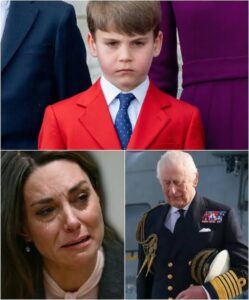
In a move that has captivated royal observers and marked a definitive evolution in modern royal parenting, Catherine, the Princess of Wales, has released a deeply personal and strategic statement regarding the future of her youngest child, Prince Louis.
Historically, the “spare to the spare” in the British line of succession faced a precarious, often ill-defined future—navigating a lifetime of intense public scrutiny without a concrete constitutional role. However, drawing from historical lessons and her own groundbreaking work in early childhood development, Princess Catherine has outlined a visionary roadmap for her eight-year-old son. The landmark announcement signals a deliberate departure from rigid royal traditions, prioritizing emotional stability, practical education, and a defined, modern purpose for the young prince.
The Palace Statement: A Mother’s Vision
The announcement, delivered via Kensington Palace, was penned directly by the Princess of Wales. It reflects a masterclass in balancing her duties as a future Queen with her protective instincts as a mother.
Excerpt from the Princess of Wales’s Statement:
“As our children grow, William and I are deeply mindful of the unique paths ahead of them. For Louis, our focus is on fostering a life rooted in service, but equally enriched by ordinary, real-world experiences. We desire for him to explore his passions freely, building a solid foundation of private capability before assuming formal public duties. Our goal is to equip him not just to support the Crown, but to thrive as an independent individual in a rapidly changing world.”
The statement marks the first time a senior royal has proactively addressed the long-term upbringing and career trajectory of a younger sibling to the heir, aiming to dismantle the historic “spare” narrative before it can take root.
The Dual-Track Upbringing for Prince Louis:
┌──────────────────────────────────────────────┐
│  The Core Pillars of the New Framework       │
└──────────────────────┬───────────────────────┘
                       │
            ┌──────────┴──────────┐
            ▼                     ▼
┌───────────────────────┐ ┌────────────────────┐
│ Private Independence  │ │ Modern Royal Duty  │
│ - Non-royal schooling │ │ - Supporting George│
│ - Corporate placement │ │ - Specialized fields│
│ - Private passions    │ │ - Mental health focus│
└───────────────────────┘ └────────────────────┘
Breaking the Cycle: No More “Spares”
For generations, the British Monarchy has struggled with the roles of younger siblings. From Princess Margaret to Prince Harry, history is rife with examples of royal “seconds” who struggled to find their purpose under the shadow of the crown.
Princess Catherine’s strategy for Prince Louis is explicitly designed to break this cycle. According to palace insiders, the Waleses are determined to ensure Louis never feels like an institutional afterthought. By establishing a clear, multi-layered plan for his future during his formative years, Catherine is giving Louis the autonomy to build his own identity.
Rather than forcing him into a rigid mold of standard royal appearances, his future will emphasize a “dual-track” life: a robust private career combined with a flexible, supportive role for his older brother, Prince George, when he eventually ascends the throne.
Education, Technology, and Real-World Integration
A key highlight of the announcement is the unconventional educational path slated for Prince Louis. While Prince George and Princess Charlotte follow more traditional trajectories suited to their future institutional responsibilities, Louis’s education will heavily emphasize modern industries and global connectivity.
| Future Phase | Planned Focus & Integration |
| Secondary Education | A focus on institutions championing environmental science, digital technology, and entrepreneurship. |
| Higher Education | Encouragement to study abroad or attend a non-traditional university to broaden his global perspective. |
| Professional Placement | A mandatory period spent working within private sector industries, completely removed from royal patronages. |
Catherine’s extensive research through The Royal Foundation Centre for Early Childhood heavily influences this decision. The Princess firmly believes that to be an effective modern royal, one must understand the everyday realities, challenges, and working environments of the general public.
The “George Support Network”: A Brotherly Bond
Despite the heavy emphasis on private autonomy, the statement makes it clear that Prince Louis will remain a vital asset to the House of Windsor. His future role is envisioned as the ultimate anchor for Prince George.
The palace hopes to foster a sibling dynamic modeled after the intense loyalty and partnership seen between King George VI and his trusted family members, rather than the fractious relationships of recent royal history. Louis will be trained to act as a counselor, confidant, and elite representative for the King, specializing in niche areas that align with his personal passions—such as marine conservation, sports diplomacy, and green technology infrastructure.
By allowing Louis to become an expert in his own right, the monarchy gains a highly skilled global ambassador who operates out of genuine passion rather than forced obligation.
The Public and Media Reception: A Resounding Approval
The British public and media commentators have reacted to the Princess’s announcement with overwhelming positivity. Royal experts have praised Catherine for her forward-thinking approach, calling it a compassionate and necessary modernization of royal family dynamics.
“This is a profound piece of crisis-prevention from the Princess of Wales,” noted one veteran royal biographer. “She has looked at the past thirty years of royal friction, identified the systemic flaw in how younger siblings are treated, and rewritten the rulebook. Louis is being given a gift that no younger royal before him received: the freedom to choose his own value.”
Furthermore, the public appreciates the transparency. In an era where the utility of the royal family is constantly questioned, showcasing a plan to raise a prince who is self-sufficient, highly educated, and privately grounded resonates strongly with contemporary values.
Conclusion: A Blueprint for the Future Monarchy
Catherine, Princess of Wales, has once again demonstrated why she is considered the strategic backbone of the modern monarchy. Her statement regarding Prince Louis is more than just a mother’s wish; it is a sophisticated institutional blueprint.
By prioritizing Prince Louis’s mental health, private independence, and specialized skills, the Waleses are ensuring that the future of the monarchy is not just slimmed down, but smarter, healthier, and more resilient. As Prince Louis continues to grow under this new framework, he stands to become the first of a new generation of royals: a prince by blood, a professional by choice, and a pillar of the modern British state.
