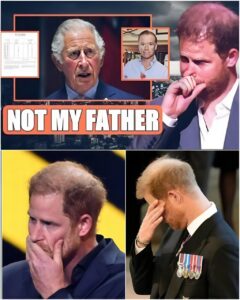
The “5-Year-Old Guess” Hoax: Clickbait Farms Fabricate a Royal Paternity Breakdown
The hyper-lucrative universe of anonymous celebrity “tea” channels and algorithm-baiting social media pages has reached an absolute peak of theatrical chaos. A shocking new viral headline has been dominating social media feeds, promising to expose an ultimate royal secret: “‘I GUESSED THIS WHEN I WAS 5Y !’ Harry burst into tears when he saw the DNA test results showing that Charles was not his father!!!!”
The sensational hook—which frames the Duke of Sussex as a weeping whistleblower confirming a lifelong childhood suspicion via a secret genetic screening—has racked up millions of views, sending online comment sections into an absolute meltdown.
Anatomy of an Automated Succession Hoax
According to the dramatic, entirely unconfirmed videos circulating on automated YouTube accounts and speculative TikTok blogs, an absolute constitutional crisis supposedly reached its climax behind palace doors. The clickbait narrative claims that a legally mandated genetic test was quietly ordered by the crown, and upon receiving the paperwork, Prince Harry broke down in tears, shouting that he had suspected the truth since he was five years old.
True to classic clickbait fashion, the videos rely on highly emotional, fabricated quotes and AI-generated voiceovers. They aggressively cut off right before exploring any actual legal or historical context, leaving an ominous cliffhanger designed strictly to force curious or shocked readers to click through endless automated ads and sketchy external links.
The Reality Check: “Spare” Truths vs. Digital Fabrication
While the phrase “Full story below” has successfully triggered a massive wave of internet traffic, a quick reality check completely dismantles the narrative, exposing it as pure digital fabrication designed to harvest ad revenue:
-
No DNA Test Has Occurred: There have been absolutely no credible reports, legal filings, or mainstream news confirmations from reputable international outlets regarding any DNA paternity test involving King Charles and Prince Harry.
-
What Harry Actually Said in “Spare”: The clickbait clip deliberately twists real words to sound malicious. In his 2023 memoir Spare, Prince Harry addressed the painful, decades-old tabloid rumors regarding Major James Hewitt. Harry revealed that King Charles actually used to make cruel, unfunny jokes about it at family dinners, saying, “Who knows if I’m even your real father? Maybe your real father is in Broadmoor, darling!” Harry noted how deeply hurtful it was for a child to hear his paternity questioned as a casual joke.
-
The Irrefutable Timeline: The persistent internet rumor that James Hewitt is Harry’s biological father is chronologically impossible. Princess Diana’s former bodyguard, Ken Wharfe, and Hewitt himself have explicitly documented that Diana did not meet Hewitt until the summer of 1986—at which point Prince Harry was already a toddler, having been born in September 1984. Harry’s red hair is a well-documented Spencer trait passed down directly through his mother’s family.
The Entertainment Disclaimer Loophole
Why do these completely fabricated headlines continue to achieve massive viral success? Digital forensic investigations reveal that these specific “Harry Burst Into Tears Over DNA” video templates are generated entirely by automated content farms.
To evade platform bans for spreading dangerous misinformation or impersonating public figures, these channels strategically hide explicit text disclaimers deep within their video descriptions, stating:
“The content presented in our videos is intended solely for entertainment purposes. This channel features rumors, commentary, and speculative fiction. Viewers should not interpret any part of this content as factual or definitive information.”
The Psychology of the “Childhood Suspicion” Trap
Media analysts note that this specific strain of clickbait relies heavily on exploiting human emotion and the natural psychological urge for a dramatic revelation. By pairing a deeply personal, fake quote like “I guessed this when I was 5!” with a high-stakes constitutional crisis, clickbait creators successfully trigger an immediate protective reflex in the reader’s brain. The audience clicks out of genuine worry or curiosity, unknowingly transforming an automated lie into advertising profit for a content mill.
Ultimately, the suspenseful cliffhanger hidden behind those downward-pointing emojis delivers absolutely nothing of substance. The reality of Prince Harry’s lineage is fully documented by history, biography, and royal law—proving once again that online algorithms will always prefer a loud, fabricated crisis over a quiet, historical reality.
