The Winds of Change: Prince Harry, Meghan, and the Speculation Surrounding a UK Return
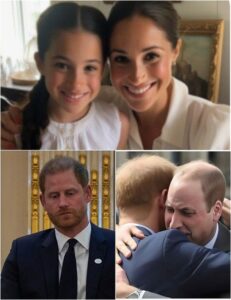
The relationship between Prince Harry, the Duke of Sussex, and the British Royal Family has remained one of the most intensely scrutinized narratives of the 21st century. Since stepping back from their roles as senior working royals in 2020 and relocating to California, the couple’s lives have been punctuated by high-profile interviews, the explosive memoir Spare, and a growing distance—both physical and emotional—from the halls of Buckingham Palace.
Recently, however, the rumor mill has shifted into overdrive. Whispers regarding a potential return to the United Kingdom, particularly involving Meghan, Duchess of Sussex, and their daughter, Princess Lilibet, have dominated headlines. While the Sussexes have largely kept their private plans guarded, the mere suggestion of a visit has reignited debates about reconciliation, security, and the possibility of healing fractured bonds.
The Complexity of a Divided House
To understand why the prospect of a visit is so significant, one must acknowledge the current landscape of the Royal Family. The departure of Harry and Meghan was not merely a change in residence; it was a fundamental shift in the structure of the monarchy. The accusations leveled in various media appearances, ranging from concerns over institutional indifference to allegations of racial insensitivity, left deep scars.
For Harry, the United Kingdom remains a place of profound complexity. It is his home, the land of his ancestors, and the setting of his military service. Yet, it is also the backdrop for the trauma associated with the loss of his mother, Diana, and the perceived abandonment by his family during his most vulnerable moments. Bringing Meghan and Lilibet back—a move that would inevitably be viewed through the lens of a “royal return”—is not a simple travel itinerary. It is a logistical and emotional minefield.
The Lilibet Factor
The inclusion of Princess Lilibet in these discussions adds a layer of poignant weight. Unlike Prince Archie, who spent the first year of his life surrounded by the traditions of the British monarchy, Lilibet has grown up almost entirely in the United States. She is a symbol of a life built outside the royal bubble, yet her title and her heritage firmly anchor her within it.
For many observers, a visit with the children is seen as the most likely “bridge” toward any form of family rapprochement. Grandparents and extended family members often harbor a desire to know the youngest generation, and there is a human element to this story that transcends the bitterness of recent years. If Harry and Meghan were to return, the presence of the children would undoubtedly shift the narrative from one of confrontation to one of potential reconnection.
The Security and Protocol Hurdle
One cannot discuss a potential trip to the UK without addressing the elephant in the room: security. Prince Harry has been vocal and litigious regarding his loss of automatic police protection when visiting his home country. He has argued that the environment remains hostile, a perception fueled by tabloid press coverage and the very real threats that come with his royal status.
Any visit involving Meghan and the children would require an intricate dance of protocol and safety measures. If they were to reside at a royal estate—such as Frogmore Cottage, which they were previously asked to vacate—it would require the blessing of the King. This creates a fascinating paradox: the very institution that Harry has criticized is the one required to ensure his and his family’s safety.
Public Perception vs. Reality
The British public remains deeply divided on the Sussexes. On one side, there is a faction that views Harry’s actions as a betrayal of duty and tradition. On the other, there are those who applaud his willingness to challenge a rigid establishment and protect his wife’s mental health.
The media’s reaction to potential news of a visit is always a barometer of this tension. Every report of a flight booking or a conversation between Harry and the King is analyzed for signs of “thawing” or “further estrangement.” Yet, the truth often lies in the quiet moments that the cameras do not see. The reality is that personal relationships are rarely mended in the public eye. If a return is on the horizon, it will likely be quiet, understated, and devoid of the grand spectacles that once defined the couple’s royal life.
The Possibility of Reconciliation
Is a full-scale reconciliation possible? Many royal commentators remain skeptical. The damage done through books and documentaries has been extensive. However, history is replete with examples of families finding ways to exist alongside one another, even after significant conflict.
If Meghan and Lilibet were to join Harry on a trip to the UK, it would likely be framed as a private family engagement rather than a public duty. It would be a moment for Harry to re-introduce his daughter to her roots and for Meghan to navigate the complexities of her relationship with the institution. Whether this would be a step toward a new chapter or merely a fleeting moment of peace is the question that keeps royal watchers guessing.
Conclusion: A Quiet Hope
Ultimately, the story of Prince Harry, Meghan, and their potential return to the UK is a microcosm of a much broader human experience: the struggle to balance independence with history, and the desire to build a new life while honoring one’s origins.
While the media will continue to clamor for dramatic photos and definitive statements, the reality may be far more nuanced. It is a story of a father wanting his children to know their heritage, a son grappling with his past, and a family attempting to redefine itself in the glare of the world’s spotlight. Whether or not they return, the significance of their journey continues to evolve, reminding us that even within the most famous family in the world, the challenges of communication and forgiveness remain universal.
