The Palace Announcement: King Charles III’s Cancer Diagnosis and the Future of the Crown
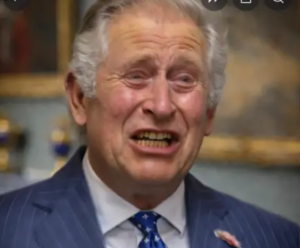
In the long and storied history of the British monarchy, few moments carry as much profound weight as a direct, transparent announcement from Buckingham Palace regarding the health of the reigning sovereign. For generations, the medical conditions of kings and queens were guarded with fierce secrecy, masked by vague statements or total silence. However, on February 5, 2024, the world witnessed a historic shift in royal communications when Buckingham Palace officially announced that King Charles III had been diagnosed with a form of cancer.
This unprecedented disclosure sent shockwaves across the globe, reshaping public perceptions of the monarchy and initiating a crucial chapter in the reign of the House of Windsor.
The Unprecedented Announcement
The official statement from Buckingham Palace was remarkable not only for its timing—coming less than a year after King Charles’s coronation—but for its candor. The diagnosis was discovered during a routine corrective procedure for an enlarged prostate at The London Clinic. While the Palace specified that the condition was not prostate cancer, they confirmed that a separate issue of concern had been identified during the intervention.
Official Statement from Buckingham Palace:
“During The King’s recent hospital procedure for benign prostate enlargement, a separate issue of concern was noted. Subsequent diagnostic tests have identified a form of cancer. His Majesty has today commenced a schedule of regular treatments…”
     [Routine Prostate Procedure]
                  │
                  ▼
     [Discovery of Separate Issue]
                  │
                  ▼
     [Official Cancer Diagnosis] ───> [Immediate Schedule of Treatment]
The decision to share the diagnosis immediately was a deliberate choice by the King. The Palace noted that His Majesty chose to be open about his treatment to prevent speculation and in the hope that it might assist public understanding for all those around the world affected by cancer.
Breaking with Centuries of Royal Protocol
Historically, the medical details of British monarchs were treated as state secrets. When King George VI, Charles’s grandfather, underwent surgery to remove his left lung in 1951, the public was merely told he had a “structural abnormality.” The full truth—that he suffered from advanced carcinoma—was largely withheld from the public and even from the King himself until much later. Similarly, Queen Elizabeth II’s health in her final months was managed with extreme privacy.
By breaking away from this traditional wall of silence, King Charles III established a new benchmark for modern constitutional monarchy.
-
Promoting Public Health Awareness: The initial announcement regarding his prostate procedure led to a massive 1,000% surge in searches for “enlarged prostate” on the UK’s National Health Service (NHS) website. By sharing his subsequent cancer diagnosis, the King utilized his personal health crisis as a powerful public service announcement, encouraging men worldwide to prioritize regular health checkups.
-
A Relatable Monarch: In choosing transparency, Charles stripped away the myth of royal invincibility. He presented himself not just as an untouchable sovereign, but as a human being dealing with a disease that affects millions of families worldwide.
Constitutional Impact and the Continuity of the State
The announcement immediately raised practical questions regarding the day-to-day governance of the United Kingdom and the Commonwealth. Under the British constitutional framework, the monarch fulfills essential state duties that cannot be easily paused.
The Palace was careful to clarify the exact boundaries of the King’s modified routine during his treatment:
| Royal Duty Category | Operational Status during Treatment |
| Public Engagements | Postponed or rescheduled to minimize infection risks during therapy. |
| State Business & Papers | Uninterrupted. The King continues to review daily red boxes, sign legislation, and hold privy council meetings. |
| Weekly Prime Minister Audiences | Maintained, often conducted via telephone or private in-person audiences. |
Because the King remained fully capable of processing state documents, the Palace did not trigger the deployment of Counsellors of State—the senior members of the royal family authorized to step in during a monarch’s severe illness or absence abroad. This calculated balance ensured the continuity of the state while allowing the King the necessary physical space to focus on his recovery.
The Royal Family Rallies
The diagnosis triggered an immediate realignment of responsibilities within the core working group of the royal family. With the King stepping back from public-facing duties, the burden of representation fell heavily upon his immediate family.
Prince William, The Prince of Wales
As the heir apparent, Prince William’s role became instantly more critical. Navigating his own profound personal challenges—including his wife Catherine’s concurrently announced health recovery—William stepped up to lead major investitures, diplomatic receptions, and community engagements, symbolizing the absolute stability and future of the line of succession.
Queen Camilla
Queen Camilla emerged as a pillar of strength for the institution. She maintained a demanding schedule of solo public engagements, constantly providing the public with reassuring updates on her husband’s spirit and progress, showing a resilient face to a worried nation.
Cross-Border Family Dynamics
The gravity of the announcement was further underscored by the swift arrival of Prince Harry, the Duke of Sussex, who traveled from California immediately after the public disclosure to visit his father. Though brief, the meeting signaled that behind the institutional machinery of the Crown lies a family dealing with a universal human reality.
Global and Domestic Reactions
The response to the Palace’s announcement was instantaneous and global. World leaders, including the President of the United States, the Prime Ministers of Canada, Australia, and various Commonwealth realms, sent immediate messages of support, wishing the King a swift and full recovery.
Domestically, the news united political factions. Leaders from across the political spectrum in the UK Parliament paused their debates to offer collective well-wishes, emphasizing that the monarch remains a vital symbol of national unity above the fray of partisan politics.
Conclusion: A Modern Monarchy Testing Its Resilience
The Buckingham Palace announcement regarding King Charles III’s cancer diagnosis will be remembered as a defining moment of his reign. It perfectly illustrated the delicate act of a 21st-century monarchy: balancing the ancient, dignified mystique of the Crown with the modern demands of honesty, public accessibility, and emotional transparency.
By addressing his health open-heartedly, King Charles III redefined the relationship between the British sovereign and the public. The announcement did not weaken the institution; instead, it reinforced its resilience, demonstrating that the House of Windsor can navigate sudden vulnerability with grace, dignity, and an unwavering commitment to duty.
